

In recent years, the efforts on marine conservation have been focused on finding solutions for the loss of marine biodiversity, the acidification of the ocean, and destructive coastal developments, among other issues. We tend to forget that the answers we have found to fix these problems were guided by only one source of understanding: academic science. Using specific parameters and methods by the premise of seeking the 'Truth’, the classical scientific approach is undoubtedly necessary to take care of the ocean. However, there are other sources of knowledge that haven't been taken into account in the decision-making for marine conservation. There is wisdom regarding the ocean outside the pragmatic lens of science, and there are ancient voices, witnesses of the changes of centuries in the marine ecosystems. So why don't we start looking for answers by turning to the most ancient solutions?
Traditionally, Traditional Ecological Knowledge (TEK) has been defined as the cumulative body of observations, experiences, and practical wisdom developed by Indigenous peoples over thousands of years to understand and sustainably manage their environment. TEK represents the ecological component of Indigenous Knowledge, which also encompasses other forms of knowledge related to culture, art, and social practices, among others. In recent years, TEK has gained increasing relevance in academia and has emerged as an alternative perspective for marine conservation. However, the limited integration of Indigenous voices can create a barrier to incorporating perspectives shaped by millennia of experience, ultimately limiting the diversity of adaptation and management strategies available for the conservation of our marine ecosystems.
To evaluate TEK approaches to conservation, it is important to first understand their guiding foundations. The principles presented below are broadly shared across many Indigenous cultures around the world. However, given the diversity of Indigenous cultures and knowledge systems, each community develops and interprets these principles in distinct ways. Therefore, each conservation project should take into account the specific knowledge, values, and practices of the Indigenous communities involved.
Firstly, TEK views conservation as a mirror to nature, examining with meticulous routine the way the Earth functions in order to mimic it and solve the threats it faces without 'taking too much'. To illustrate, let us imagine a study on the protection of sea turtles. In the case of science, intrusive satellite trackers and cameras are thrown into the ocean to monitor where they migrate and reproduce in order to establish protected areas. Native knowledge doesn't try to control the environment, but instead adapts human activities to them, avoiding fishing during nesting season to disturb as little as possible the natural balance of the ecosystem.
Moreover, the principle of reciprocity that guides indigenous actions established that humans cannot just take from the Earth, but must also respect the change and act as caregivers instead of owners. This translates to approaches limiting the resources that we need, minimizing the harm and always giving something back.
In the sphere of native science, the notion of giving something back means active care of land stewardship. Man is a part of nature, not superior, but an essential species for the well being of the planet. As the stewards of the ecological systems that sustain our life, we have a duty to actively care and sustain them. Humans have a need to take from nature, and she is happy to give to us, so instead of staring at it as a living museum, or as an endless resource supply, we should commit to an honorable exchange with nature. We must start by asking the question of how can I help the ecosystem to perform in a healthy and resilient way?
This interconnection is explained as well by the TEK view of ecosystems as a whole, in which individual survival is connected to collective well being. Every species has a purpose and plays a role in maintaining the balance of the ecosystem. Therefore, conservation involves respecting and protecting these relationships rather than disrupting them. To give a practical example, in native science there is a practice called honorable fishing. This translates to an awareness of the nesting periods of species, avoiding fishing during certain seasons. Then, top predators help maintain the balance of the marine ecosystem by regulating the populations of their prey through predation. This natural control prevents certain species from becoming overabundant and overgrazing the algae forests. This is important because the loss of algae forests would destroy nursery grounds for many marine species.
Finally, a fundamental element of the core principles on TEK is their emphasis on their values. Unlike the scientific method that often tries to separate values from facts, native science is intrinsically tied to ethics, coupling empirical and multi-generational observation directly with their moral responsibility and beliefs for their surroundings. From their point of view, the division of knowledge and responsibility is a complete illusion. The question then becomes how do we ground this knowledge and turn it into practice?

The TWO-EYED SEEING, integrating native models of marine sustainability with marine conservation efforts
Researchers wearing the dual lenses on native and western knowledge follow the guiding principles of the Two-Eyed Seeing, applying the benefits of the Traditional Ecological Knowledge from one eye and looking at them with the western tools of science in conservation. Indeed, there are already some existing projects on marine conservation working with these dual lenses.
Consider for instance the Guardian Watchmen program carried out in the fjord shoreline of British Columbia. Conducted by the Coastal First Nations, distinct indigenous communities in the area as the Haida and Nuxalk Nation, work closely with scientifics to be the eyes and ears on their waters. In their work, they track the changes in ocean temperatures, monitor fish populations and implement sustainable harvesting practices. Combined with modern conservation techniques, these traditional stewardship practices ensure the preservation of the ocean, as well as the millennia of cultural practices that have been used.
Illustrating the braiding of this knowledge to the far reaches of New Zealand, the Mona a Project partner with the Māori tribal group of the iwi for improving marine heatwave forecasting. Carrying sensors on their boats, they tackle the temperatures in their daily activities, as well as connecting the data to specific actions based on their knowledge on what will happen to the essential species, places, and resources for the coastal communities.
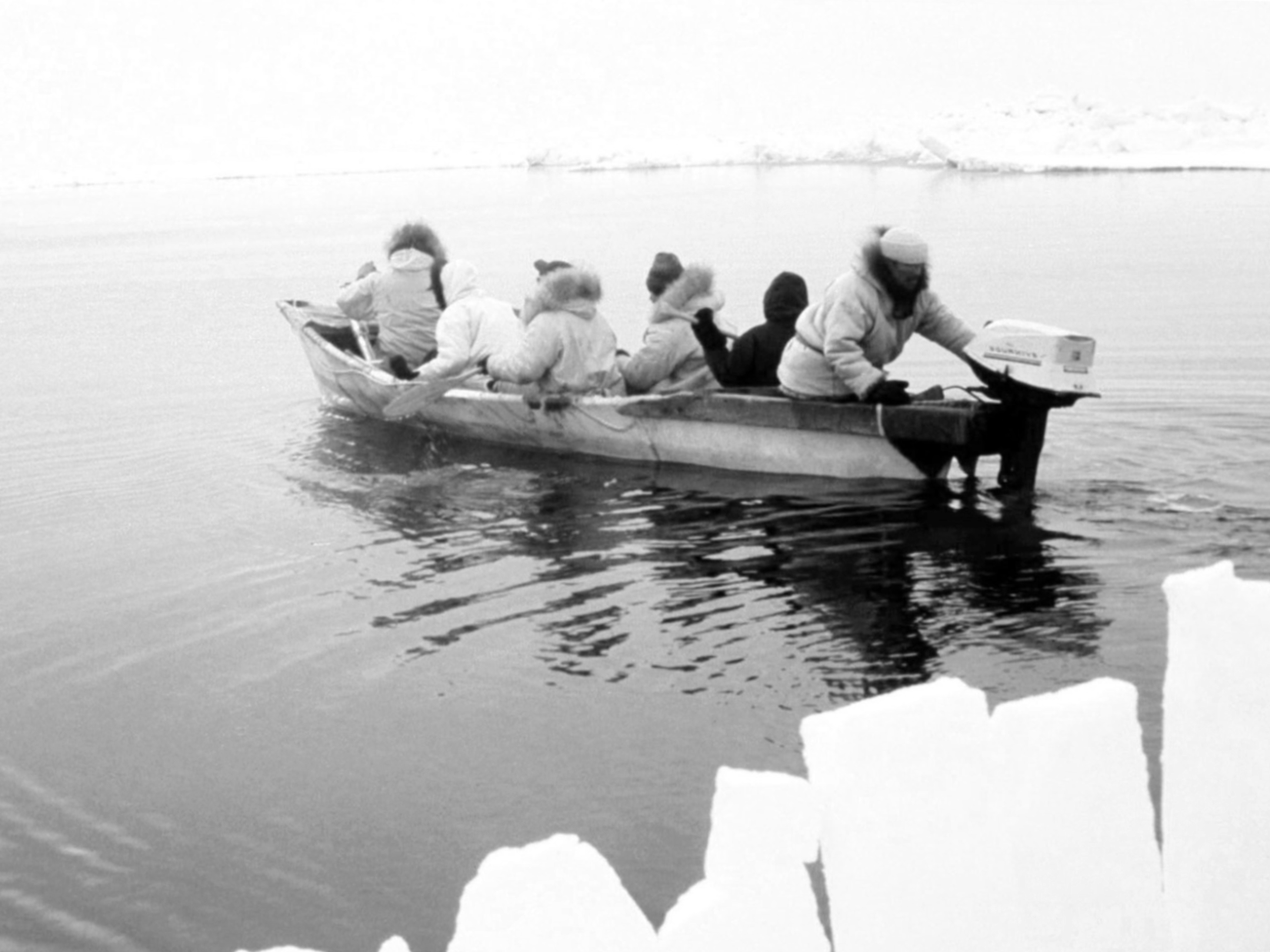
Furthermore, having lived along the shores of the Arctic, the Inuit's wisdom on cryospheric science are enhancing our understanding of the increasingly less predictable sea ice melting patterns. Bringing together the Inuit's expertise in ice safety and innovative monitoring, the SmartICE initiative is enhancing the understanding of the ice conditions to support the decisions on safe travelling routes throughout the ice.
Through the scientific lens we are all aware of the negative message regarding the degradation of marine ecosystems. We've been told that, as humans we are the problem, the outsiders of the species, with the only duty to interfere as little as possible. But integrating Indigenous knowledge provides science the purpose not of repairing, but improving, because as a species we have not only the power to change, but the duty to take care of the ecosystems that nourishes us.
The most important ingredient for a good finding in science is as simple as the humility of recognizing that there are some questions that need other forms of knowledge, as well as knowledge that will ask questions in a different way. Traditional Ecological Knowledge reminds us to start remembering what we have forgotten to improve not only the management of marine ecosystems, but our way of relating to them.