
Our planet is a blue planet. The high seas cover nearly half of Earth’s surface but, until recently, only 1% were under protection. However, in September 2025, the international community reached a historic milestone to protect marine biodiversity in international waters, and by extension ourselves. Grounded in the principle of the common heritage of humankind, the High Seas Treaty was ratified under the United Nations Convention on the Law of the Sea (UNCLOS), and it will enter into force this month. Established as a response to the ongoing degradation of the ocean, it is the first legally binding framework dedicated to protect marine ecosystems in areas not governed by individual countries.
To fully understand the importance of this agreement, we must go back to 1982, when the UN Convention of the Law of the Sea defined the concept of high seas. This vast amount of water and life, rich in biodiversity and ecological processes, had never been subject to specific regulatory measures. The existing legal framework was fragmented and incomplete, and therefore insufficient to ensure the effective conservation and sustainable use of marine biodiversity in areas beyond national jurisdiction. In the decades that followed, states engaged in prolonged negotiations to address this governance gap. These efforts culminated with a final text presented at the UN conference on March 4th 2023, officially known as the Agreement on Marine Biological Diversity of Areas Beyond National Jurisdiction (BBNJ). Three years later, following ratification by 60 countries, the BBNJ Agreement, commonly known as The High Seas Treaty, is set to enter into legal force in January 2026.
But why is there such urgency for a treaty to regulate the deep sea? Every country has jurisdiction over the waters extending 200 nautical miles from the shore, their Exclusive Economic Zone (EEZ). Beyond the EEZs lie international waters, home to an estimated 10 million species and function as essential migratory corridors for whales, tuna, and other ecologically significant species. Despite their importance, are a vast no-man’s land of ungoverned ocean. Its juridical classification makes them particularly exposed to threats, resulting in severe biodiversity loss and ecosystem degradation, driven by expanding human activities such as commercial shipping, overfishing, plastic pollution, and deep-sea mining. The treaty’s significance therefore lies not only in the measures it introduces, but also in the vision of continuity and resilience necessary to preserve entire ocean systems. A sustainable framework over time is a critical step toward achieving durable, science-based ocean conservation at scale.
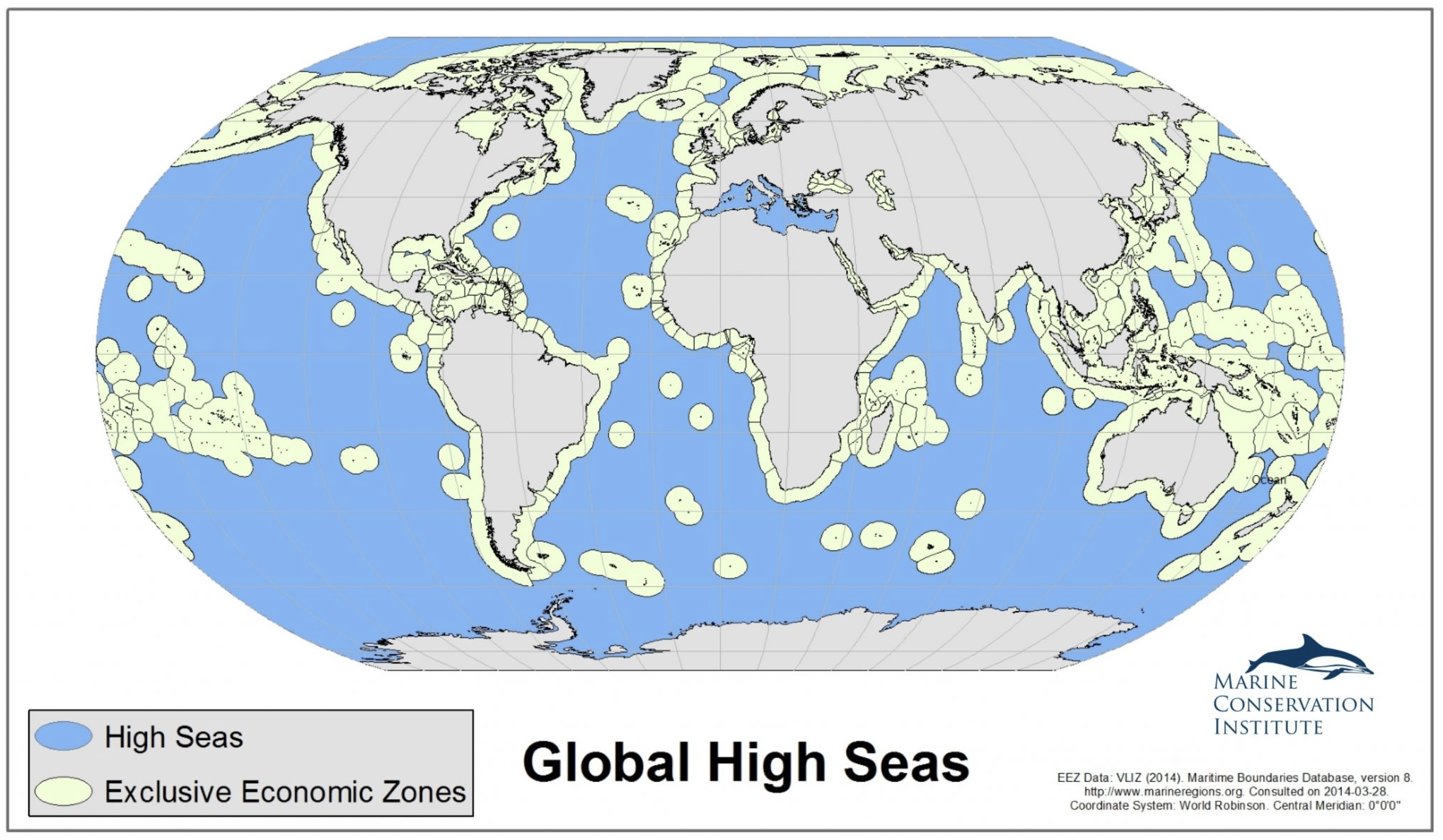
Global High seas. Retrieved from Marine Conservation Institute (https://marine-conservation.org/on-the-tide/high-seas-protection/)
And what are the key points of the treaty?
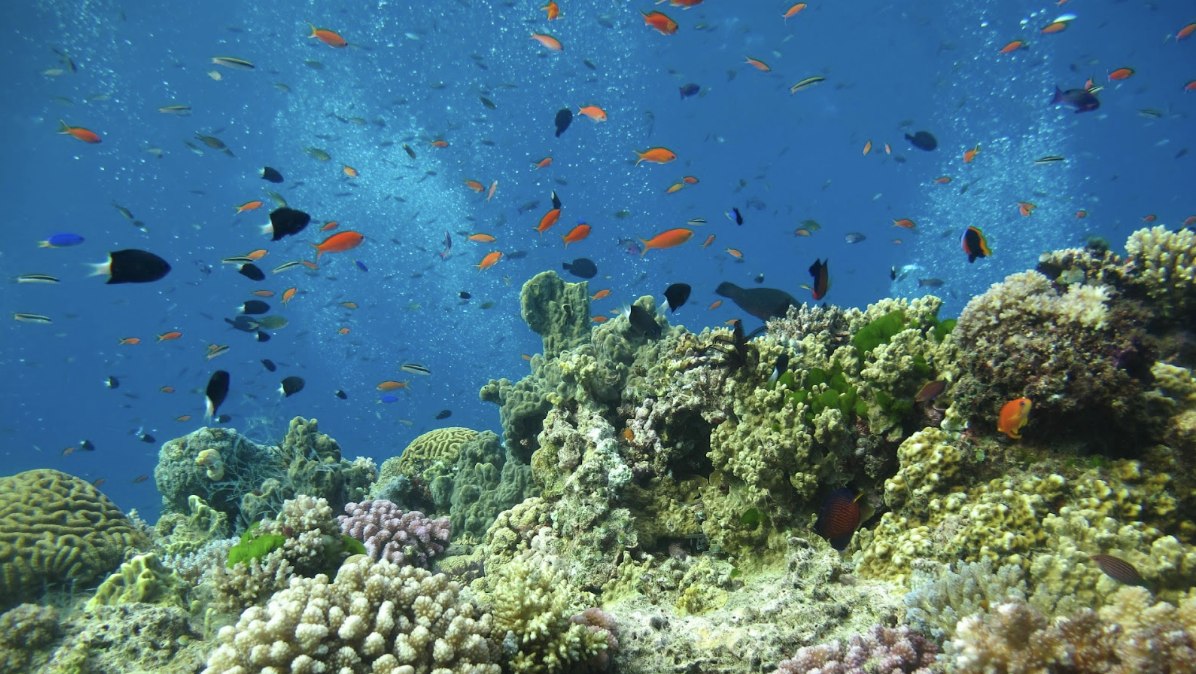
Marine Protected Areas (MPAs): MPAs are essential for the conservation of marine ecosystems. Specifically, it is urgent to act in the conservation of areas of high biodiversity, such as coral reefs and mangroves, or areas such as seamounts, hydrothermal vents, and migration corridors for annual migrations. For example, the Bornholm Basin in the Baltic is an example of an area that requires increased protection for marine conservation due to their high levels of biodiversity and vulnerability to threats.
Environmental Impact Assessments (EIAs): The agreement mandates EIAs for activities likely to have significant impacts on the marine environment. This requirement ensures that potential environmental harm is identified, assessed, and mitigated before activities are authorized in areas beyond national jurisdiction.
Marine Genetic Resources (MGRs): the ocean contains the highest functional biodiversity on Earth, which is closely associated with a high genetic diversity. Although only a tiny fraction of the high seas has been studied, marine genetic resources hold significant scientific and potential economic value. The treaty promotes international scientific cooperation and establishes mechanisms for the fair and equitable sharing of benefits derived from MGRs, while safeguarding the freedom of marine scientific research.
Capacity Building and Technology Transfer: Recognizing the disparities in resource access, the treaty includes measures aimed to enhance national capacities and technological capabilities related to marine conservation and sustainable use of ocean resources.
The management of the ocean needs to be as interconnected as the ocean itself. By weaving together national actions within a robust global legal framework, the world can ensure a resilient, equitable and thriving ocean for generations to come. “The High Seas Treaty” marks a turning point in marine conservation and collective action in environmental matters. Nevertheless, do not forget that every great wave is born from the convergence of countless small currents of air. It is the individual responsibility of each of us to contribute locally to a healthy ocean. You can literally get your feet wet with your local organisation for being part of this wave. Each of us belongs to a watershed, whose waters eventually lead out into the great and vast ocean, be part of the echo shouting: ta vare på havet (take care of the ocean)!