
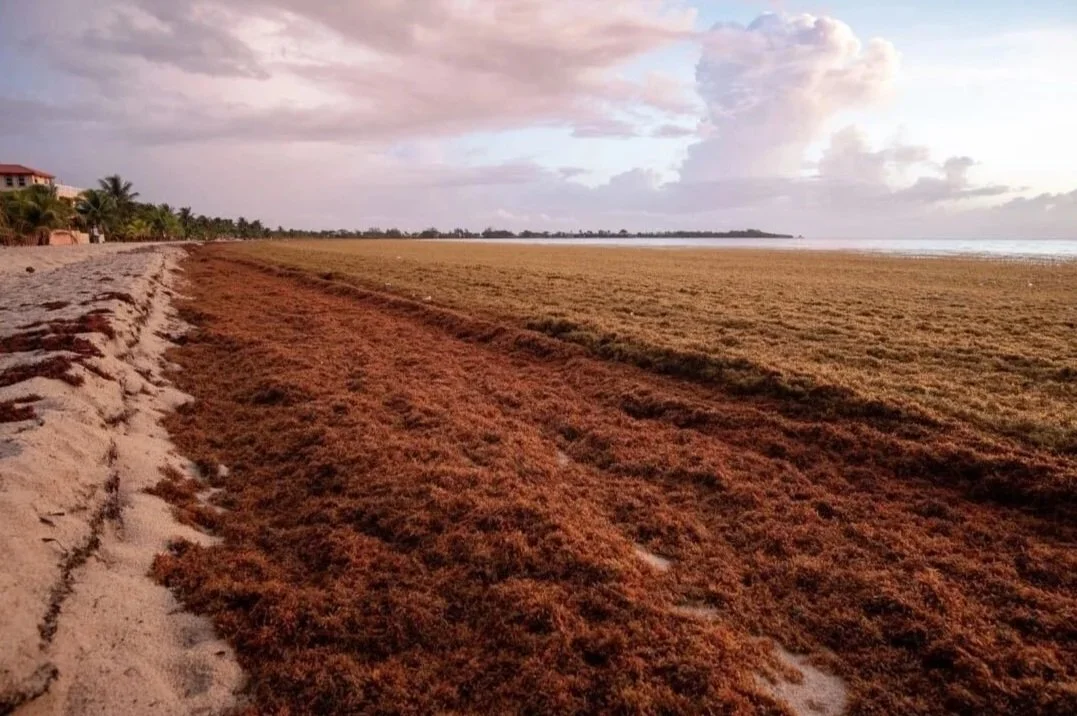
Once a prime tourist destination for white sandy beaches and clear waters, the Caribbean Sea is now host to brown seaweed and the smell of rotten eggs in the air instead. This new reality is the product of large-scale algal blooms, specifically what is known as the “Great Atlantic Sargassum Belt” - and is fueled by warming oceans and favorable environmental conditions in the warm tropics.
The bloom phenomenon first began in 2011 with unprecedented volumes, and the Sargassum algae has since found a home in the waters of the tropical Atlantic. Now, 15 years later, 2026 is predicted to be a record-breaking year for the brown invasion, starting earlier and with heavier volumes, already showing that the algae amount is surpassing 75% of historical values. This issue puts substantial pressure on the environment, health and economy of the Caribbean region, with what started as an anomaly in 2011 becoming a more permanent regime shift. So, what are the specifics of why this is happening, and what can be done about it?
Let’s discuss the origin story first. Algal blooms are defined as a rapid increase of algae populations in both freshwater and marine environments. Specific conditions occur to aid this excessive growth: abundant nutrients (phosphorus and nitrogen), alongside increased sunlight for photosynthesis and warm waters - which is why algal blooms are seen in spring and summertime. Usually, as a result of such sudden abundance, the waters become typically green or red/brown. These blooms are not inherently bad, and are rather a crucial part of ecosystem functioning and the aquatic food chain.
Moreover, the free-floating Sargassum algae is itself an important habitat and nursery for animals in open waters, providing shelter and breeding grounds. The Sargassum gives its name to the Sargasso Sea, the natural habitat for the algae, and derives its name from Portuguese sailors who named them after grapes (“sargaço”), for the air bubbles in the algal structure allowing this floating marine paradise. These algal mats - or “floating rainforests” - safeguard species such as the gray triggerfish, mahi mahi, sea birds and the endangered loggerhead sea turtles. However, when this Sargassum floats into shore, it becomes a harmful algal bloom (HAB), and impacts flora, fauna, human and ecosystem health, infrastructure, and ultimately, the entire economy. In 2025 the seaweed amassed to 37,5 million metric tons, showing previously unseen volumes with a 58% increase compared to 2022. The University of South Florida predicts this to get worse in 2026.
Pre-2011 this seaweed lived peacefully in the Sargasso Sea in the North Atlantic, but specific anomalous current conditions (known as a negative North Atlantic Oscillation event) occurred in 2009/2010 and pushed the algae into the tropics, creating the Great Atlantic Sargassum Belt (GASB). At its peak, the GASB extends from the Gulf of Guinea, West Africa, to the Caribbean Sea, where it found an ideal home for proliferation. Nowadays, the Sargassum is a HAB not because of its toxicity but rather its sheer biomass, causing major disruptions and issues in the Caribbean countries. So, what was a fluke in 2011 ended up becoming a tipping point which allowed the Sargassum to establish a new population, and it transformed the conversation in the Caribbean from "How to get rid of it?" to "How to live with it?”.
The consequences of Sargassum finding a suitably warm and nutritious environment in the Caribbean waters can be deemed a triple threat: environmental impacts, economic effects and public health issues all together. Firstly, the massive quantities of algal mats pose a suffocation risk to marine flora and fauna. As the algae forms a thick cover on the surface of the ocean (and up to 2m height on beaches), they block sunlight from reaching the ocean floor and corals, threatening the ecosystems in shallow waters. Additionally, as the Sargassum piles up, it begins to quickly decay, causing hypoxia (a lack of oxygen) and creating so-called “dead zones” which kill fish, crabs and rays that are stuck in the algae near the shore. Lastly, as the seaweed piles up high and creates a barrier between the beach and water, turtles cannot get to the sand to lay eggs, and newly-hatched turtles cannot get to the water on the other hand. In terms of related public health effects, toxic gases are the main threat. When Sargassum decays, the rotting releases hydrogen sulfide and ammonia - substances that can cause respiratory, neurological and cardiovascular problems after longer exposures. Moreover, the floating structures can cause issues for swimmers and water infrastructure in the islands, as it can harbor sea lice and bacteria capable of causing rashes while also clogging waterways and leaching toxins into drinkable water. Finally, these effects are compounded into significant economic pressures, threatening the blue economy that the Caribbean relies on. As of March 2026, 19.1 million tons of biomass has been measured. This type of inundation is a significant crisis for tourist-dependent countries in the Caribbean, as it affects fishing activities, clogs engines, leaves beaches empty and incurs high cleanup costs. In Florida, annual cleanup costs are estimated at $35 million dollars. Going forward with predicted blooms to be even more massive, these costs can be expected to only increase in tandem, creating a multi-million dollar operation to keep tourism alive.
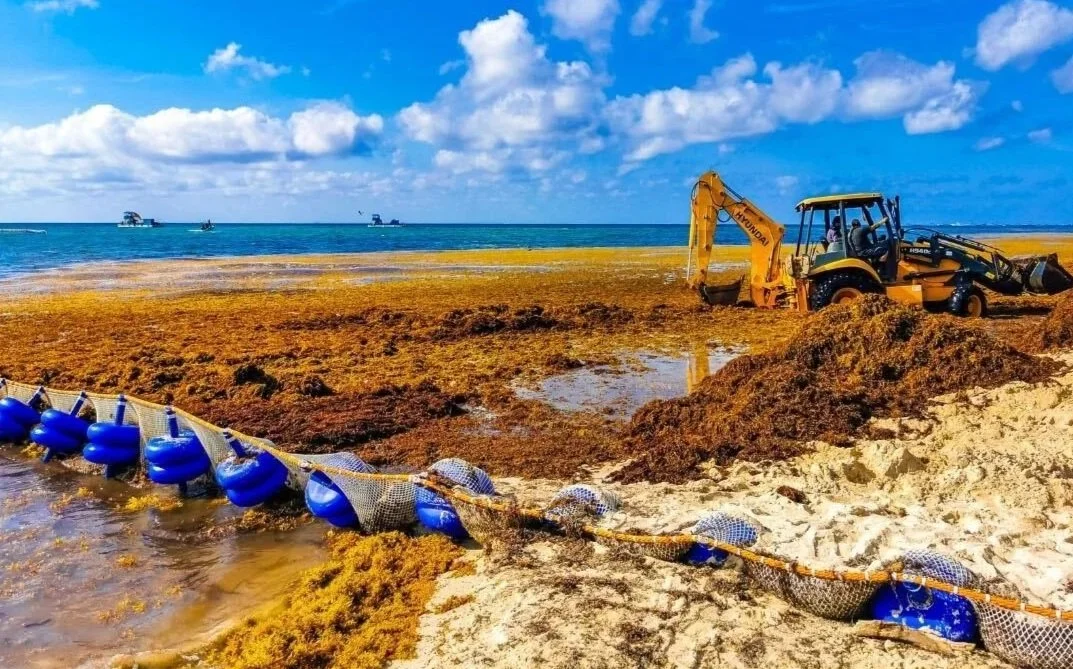
The Great Atlantic Sargassum Belt and Sargassum blooms in the Caribbean seem to be staying as a semi-permanent feature of the Caribbean Sea, so it becomes relevant to discuss what the future holds for this region. While there are various downsides to this seaweed’s invasion, the narrative does not have to be one of despair, if a “proactive harvesting” rather than a “reactive cleaning” approach is taken. Traditionally, the model would be to deal with the floating nuisance using sea barriers, heavy machinery that significantly erodes beaches, and manual labour to bring the algae to a landfill. As of 2026, more advanced techniques are considered, with the potential to use Sargassum as renewable biomass. Research shows that the algae could be an asset, so long as there is a significant change in collection strategy and a biorefinery to take advantage of the algae’s quantities.
Ultimately, solving this crisis also requires a recognition of how interconnected the oceans are. No single island or country can fix this alone, and better communication, coordination and management are needed. However, the success of such collaboration often hinges on the prevailing political climate. Management strategies and funding are frequently dictated by specific country alignments and shifting diplomatic priorities, thus shedding light on the importance of the geopolitical environment as well. These international alliances are made possible through already-existing frameworks such as the UNEP Cartagena Convention for the protection of the marine environment of the region and the EU Caribbean Global Gateway initiative for sustainable development. Various smaller-scale initiatives exist too, with many platforms tracking the floating Sargassum so that it may be dealt with before it reaches shores. Furthermore, success stories such as Rum & Sargassum Inc. in Barbados (using seaweed to fuel vehicles) or Sargablock in Mexico (making sargassum building blocks to replace highly-polluting cement) are just two of many that show us that circular-economy and proactive harvesting models can work to transform this nuisance into something sustainable and even positive. As individuals, it is important we become part of the solution by choosing to support these businesses that are pioneering Sargassum products, thus alleviating the crisis in the Caribbean, and other potential algae-riddled ecosystems caused by climate change in the future.