
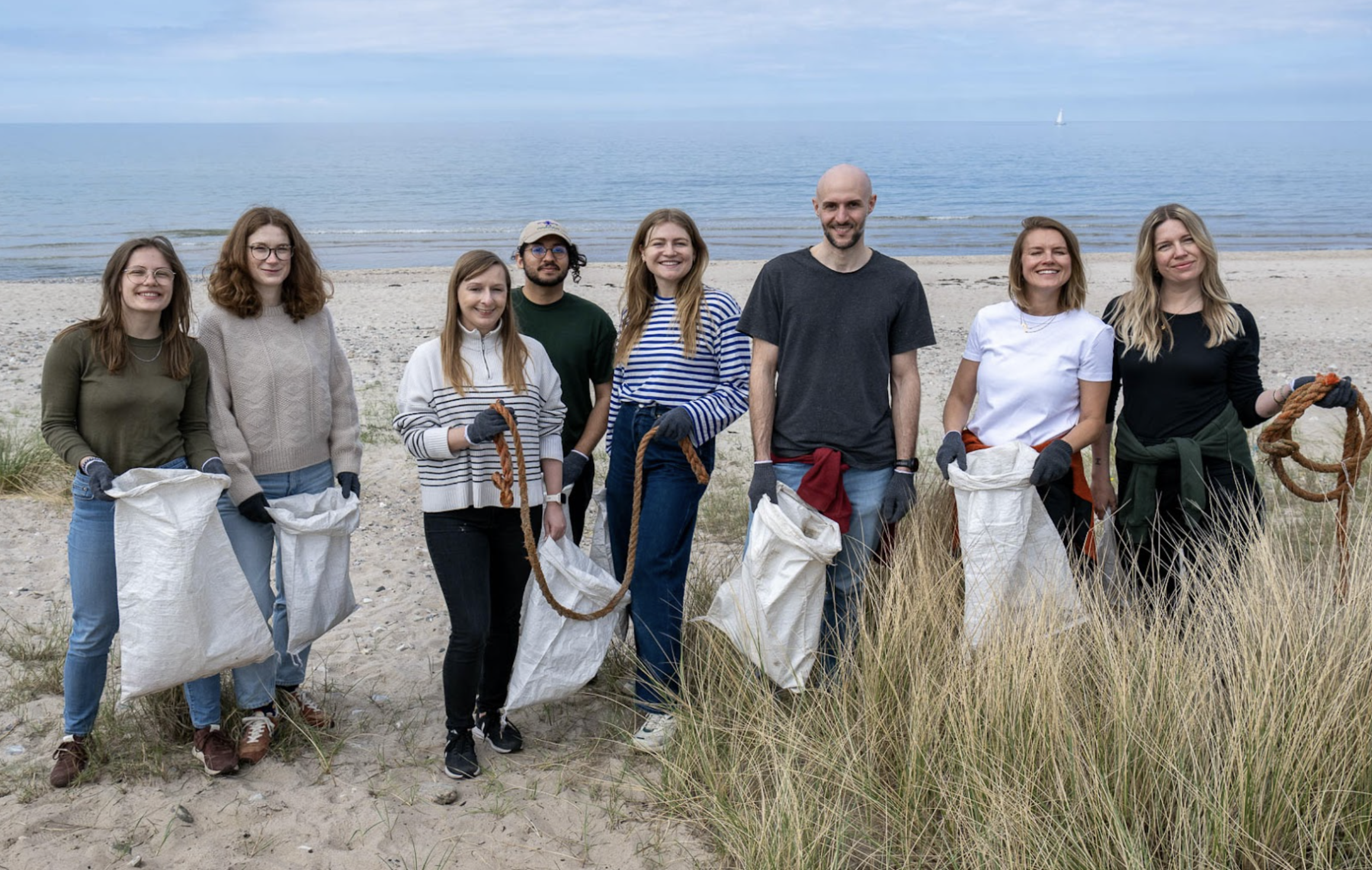
Image obtained from Nordic Ocean Watch Denmark
In today’s blog we introduce our readers to citizen science and how it can be a useful tool in the realm of data collection and environmental monitoring. Alongside this, we showcase some of the citizen science projects found in Denmark that you can participate in.
Citizen science in the most basic terms is any involvement from the public in scientific research. Through citizen science, individuals can assist in various stages of the scientific process, from developing research questions to data collection and analysis. The forms of citizen science are plenty, and there are projects which anyone can assist in. An example of this is Project Biodiversity Now, a project which ran from 2015 to 2020 and is considered one of Denmark’s largest citizen science projects, amassing over one million species observations collected by over 27,000 public participants through the app, NaturTjek. This project has helped researchers at Aarhus University and Copenhagen University to update the Nature Municipality Index, which is an indicator of how each municipality fares in terms of abundance of nature and quality.
Citizen science can cover an array of different sectors; for context, a 2026 research paper suggests citizen science data can support survey data across 11 out of 17 Sustainable Development Goals (SDGs). Nordic Ocean Watch is an example of citizen science as an organisation which collects data from beach cleanups on the types of waste that are found, as well as participating in research expeditions and publishing schoolbooks.
Citizen science brings with it many advantages and presents itself as a tool and solution for lower-income countries that lack survey infrastructure to consistently update national statistics. In higher-income countries, we are witnessing a different issue, which is the dissolution of survey institutes. For example, the termination of the Demographic and Health Surveys in early 2025 and the proposed cuts to the Environmental Protection Agency by the United States administration. However, citizen science runs outside of the political sphere; therefore, it can be seen as an alternative to monitoring and data collection for national and global statistics.
There is a hesitancy in the scientific community concerning the validity of data collected through citizen science, as it is difficult to regulate and ensure high quality. Citizen science is currently viewed as a supplementary source of data for science research. In today’s research environment, it is undervalued as a reliable and relevant source of data, which suggests that structure frameworks be put in place by policymakers, researchers and the public. Frameworks such as the European Citizen Science Platform, Technical Advisory Framework and SMART Framework are just some examples of initiatives put in place when it comes to data collection, ethical considerations and intellectual property. These frameworks assist in how the scientific community can efficiently utilise any data collected through collaboration with the public, minimising scrutiny and amplifying high-quality and quantifiable research.
Citizen Science in Denmark
In Denmark, community-based research is a growing tool for assisting science-based research; this is highlighted in the creation of the Citizen Science Knowledge Center at Syddansk University (SDU). The goals for the Knowledge Centre are to bridge the gap between community and science-based research. Another example of citizen science movements is Danmark Planter Ålegræs (The Great Danish Seagrass Project), an initiative which has brought together the diving community, the public and researchers across Denmark in a three-year community-driven restoration project.
This Great Danish Seagrass Project is organised by the Ocean Institute in collaboration with SDU and funded by the Nordea Fund. It has seen 200+ volunteers run yearly test plantings and collect data on Denmark’s seagrass populations. The Danish eelgrass (Zostera marina) population has seen a decline in population of approximately two-thirds since 1900, in part due to nutrient pollution, bottom-trawl fishing, global warming and increased human development on the coastlines where seagrass resides – highlighting the need for the citizen science project. Seagrass positively influences the marine environment, as it increases biodiversity, by providing a home and nutrition to a variety of marine life. Seagrass also acts as a natural barrier against coastal erosion, protecting dwindling coastlines from sediment replacement, and plays a significant role in blue carbon storage by capturing carbon dioxide and trapping carbon in their roots.
Citizen science is an impactful tool for the everyday person to actively participate and contribute to research for the betterment of the environment and society. Highlighted in this blog are just a few examples of projects that have positively impacted efforts to preserve the marine environment and there are hundreds of projects which you can get involved in.
Tips and Tricks (How to get involved?)
Nordic Ocean Watch wishes to encourage our followers and the public to engage in citizen science projects in Denmark and around the globe. Here is some advice on how you can participate:
Find projects you are interested in.
The European Citizen Science Association website has the most comprehensive list of initiatives in Europe. In addition, Zooniverse can help you find initiatives around the globe. Knowing where to start is often half the battle; our intentions are there, but it can be overwhelming.Reach out to institutions and/or organisers of projects for information on best practices.
This ensures the methods you use align with the initiative to make it as reliable as possible. The science community is a helpful one; more often than not, researchers will be glad to assist motivated individuals.Combine your hobbies with citizen science.
Are you an avid birdwatcher? Do you often go on nature hikes? Are you a diver? Do you venture out to the sea? – You may already have valuable knowledge and equipment to participate in citizen science initiatives which align with your hobbies.Apps!
There is an abundance of mobile apps such as Naturtjek, iNaturalist, eBird, GLOBE Observer, to name a few, which help with data collection. These are great tools to assist you on your morning walks, nature hikes or travels across the globe, not just to learn about local flora and fauna but also to assist in the collection of data in the local environment.