
As sea levels rise and extreme storm events increase in frequency due to worsening climate change, low-lying coastal areas face significant adaptation challenges. Countries such as The Netherlands, Indonesia, the Maldives, Tuvalu, and even Denmark are faced with the question of how to protect their shorelines for the next century. As such, engineers are increasingly opting for large-scale structural adaptation, including seawalls, storm-surge barriers, and artificial land reclamation to protect urban populations and infrastructure. However, while such projects and engineering feats might have plenty of benefits, they also come with issues and controversies related to their climate, resource and environmental footprints.
Specifically, land reclamation – the act of creating new stable land by filling in a part of ocean, river, lake or marshland with soil, sand or rocks – has been on the rise. Driven by population growth and the associated need for more residential, agricultural and industrial land to keep cities running, these types of projects have become popular in East and Southeast Asia, and the Middle East. One such project is much closer to home though, and is of course Copenhagen’s Lynetteholm, expected to be completed by 2070 and serve as a city shield against sea-level rise.
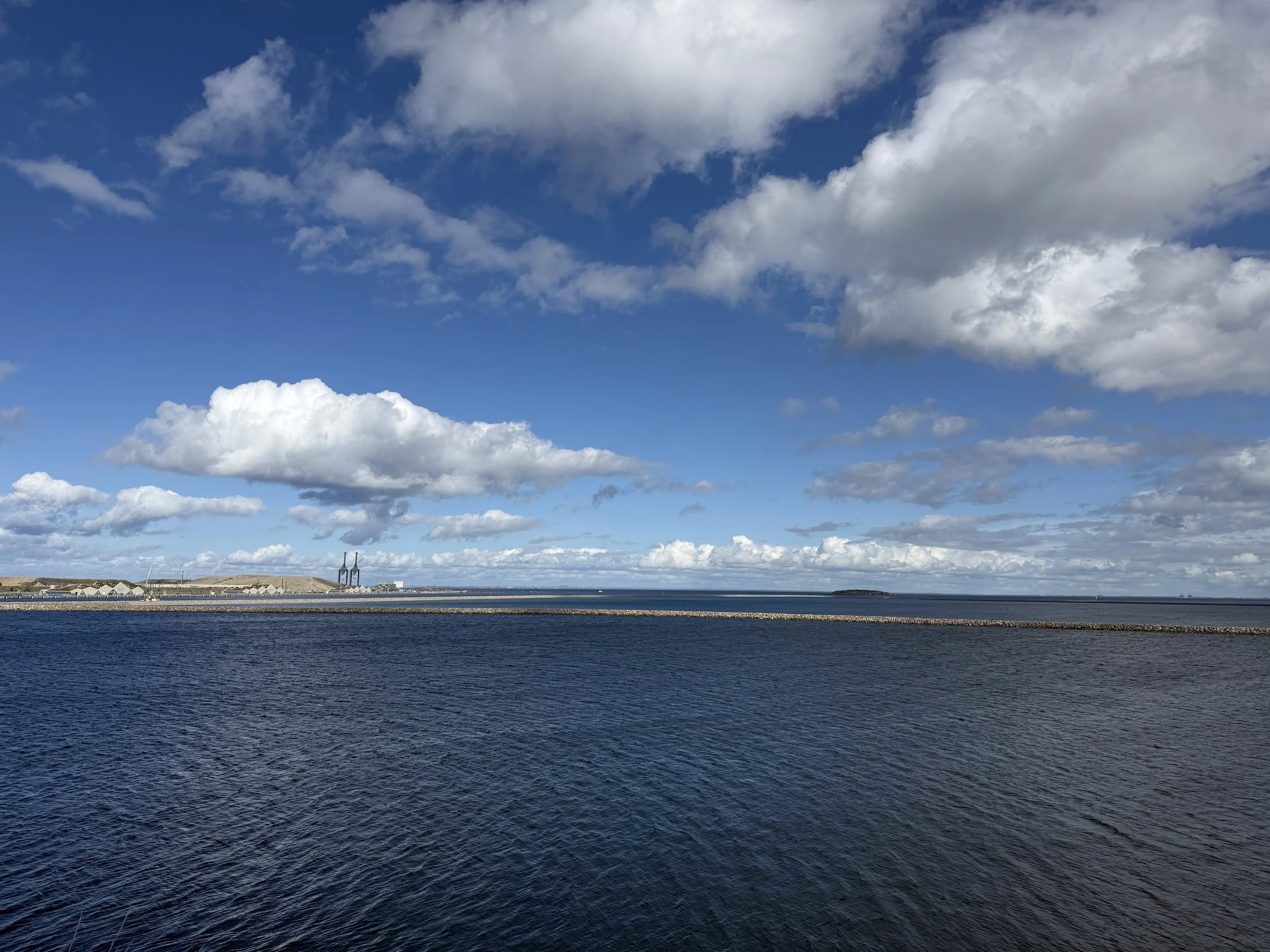
Part of Lynetteholm construction as seen from Trekroner
Recap of the project
Planned as a 282-hectare (almost 3km2) artificial peninsula, situated above Reffen in the city’s northern harbor within the Øresund strait, Lynetteholm is engineered to protect the city against future storm surges while providing housing capacity for an estimated 50,000 residents. According to the Copenhagen Kommune, the project is meant to tackle four issues in the city: climate change, the housing crisis, traffic and soil surplus.
And indeed, the model of Lynetteholm incorporates two approaches to materials and their origins. On the one hand, it’s designed to absorb approximately eighty million tons of surplus earth from local construction sites across Copenhagen over several decades. This soil surplus comes from whenever the Copenhagen metro was dug out, for example. On the other hand, construction also relies on imported stone and dredged marine aggregates to stabilize the outer sides of the new land against waves and currents.
The project was announced in 2018, and construction began in 2022, making it 4 years in the development phase already. However, even now, many controversies still follow the artificial island.
Why revisit Lynetteholm?
When we previously covered Lynetteholm in 2022, public outrage was at a boiling point over plans to dump millions of tons of dredged marine sludge directly into Køge Bugt - representing the point of our article at the time. However, this initial dilemma was forced to a halt and instead, developers were required to contain dredged materials within the project’s own perimeter walls.
In 2026, the project has reached its next major operational milestone, making us write about it yet again with a status update. The primary seabed excavation is complete, and the seven-kilometer outer stone perimeter dam was completed in June, with the King of Denmark adding the symbolic last shovelful of material. As the ring closes, Lynetteholm now moves on to “filling the tub” using the surplus soil in the southernmost point of the island with phase 2 of the project, according to the developer By & Havn.
Even as the project shifts from the more preliminary and theoretical to taking physical shape in the city’s harbour and absorbing millions of tons of urban earth, persisting criticism from environmentalists and citizens remains.
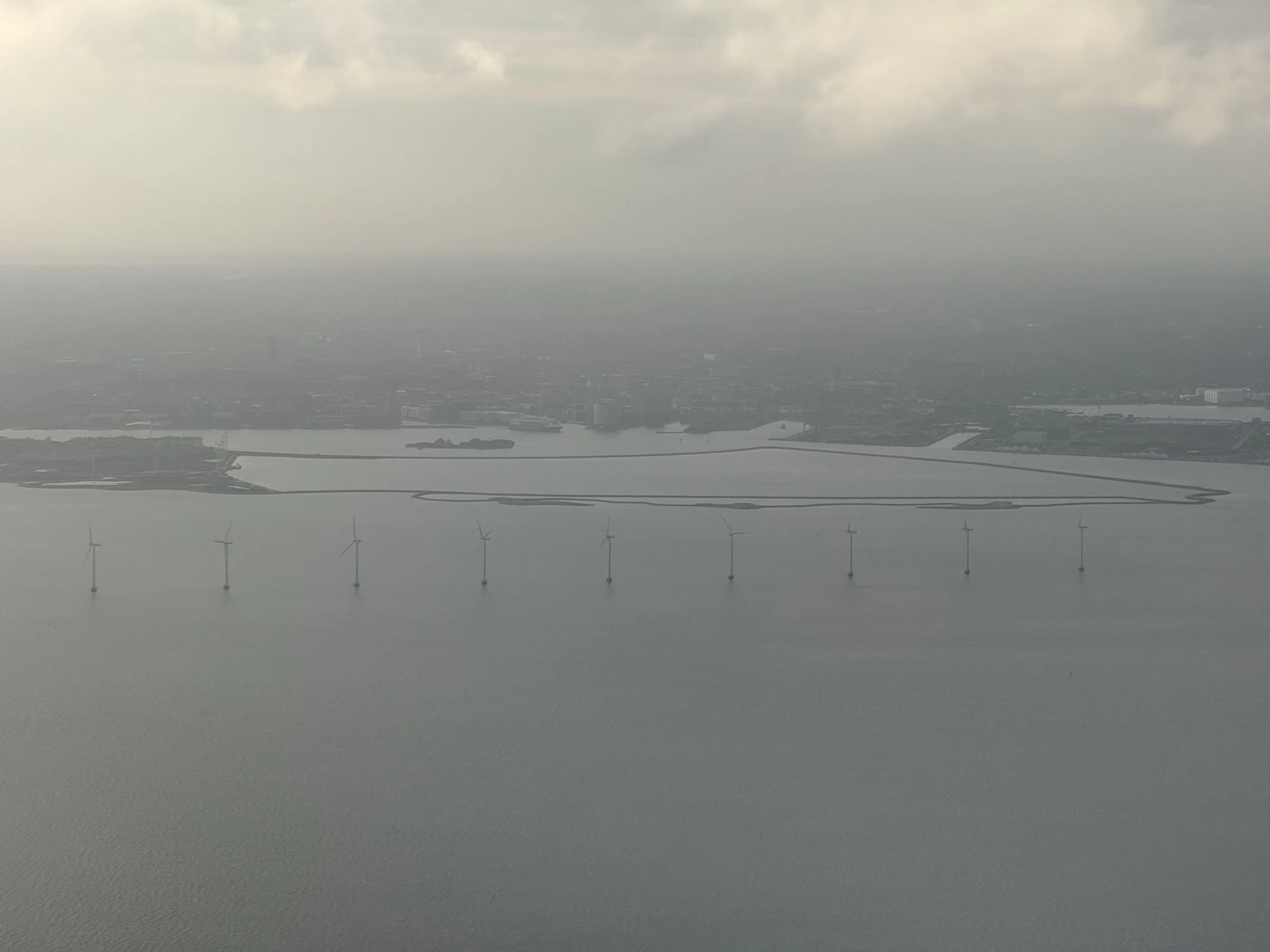
Lynetteholm perimeter, seen from a plane
The water flow debate in the Øresund
The current reservation about Lynetteholm is the remaining issue of the Øresund strait and the salinity of the surrounding seas. The Øresund is a narrow patch connecting the North and Baltic Seas, and the fear is that adding land to this strait would greatly impact bathymetry and seabed pathways.
While reports previously concluded that Lynetteholm is expected to only reduce saltwater flow by 0.23% - 0.5%, considered to be negligible, scientists still warn that this could severely impact the ecosystem functioning and marine balance of the strait. The island has altered and limited one of three trenches (Storebælt, Lillebælt and Øresund) that transport salinity, and more importantly, oxygen to the Baltic Sea, according to the Time. This could have damaging effects on the flora and fauna that has adapted to brackish conditions, and could drastically change the salinity of the surrounding waters over a longer period. Additionally, as shown on the HELCOM map, the Baltic and Kattegat seas are spawning grounds for fish species (cod, herring, sprat), raising the question of the project’s impacts on these ecological regions.
Movements such as “Stop Lynetteholm” and similar protests oppose that the project is going full-steam ahead, despite concerns that the modifications of the strait might have negative environmental impacts of unknown scale and severity in the coming decades. Furthermore, this campaign has an interesting international dimension, as other countries bordering the Baltic could also be affected by Lynetteholm extending past Danish borders, thus illustrating another complexity of land reclamation projects.
Looking ahead for coastal adaptation
The story of Lynetteholm really showcases the complex future of coastal cities. On one side is the need to protect urban populations from rising seas and storm surges. But on the other is the equal need to make sure vulnerable marine ecosystems are as unaffected by side effects of heavy coastal engineering as possible. This is accompanied by many studies that analyse worldwide cases of coastal protection and land reclamation projects finding that artificial land and coastal modifications almost always have hidden costs and unintended consequences. It’s therefore crucial to have a rigorous assessment of all elements when undertaking projects as big as Lynetteholm, to effectively weigh all the trade-offs between social development and environmental protection.
The public reaction to Køge Bugt in 2022 proved that civic engagement and environmental oversight can directly alter how major infrastructure is built. As Lynetteholm seals its outer stone edges and moves forward, it will be interesting to follow how the project will behave over the years.