
Changing things up from our usual format, this blog post takes you through the firsthand experience of Gustav, one of NOW team members, who is currently writing his master’s thesis on marine litter accumulation in the sub-Arctic region of the Westfjords, Northwest Iceland.
This summer, Gustav has been scouring the Westfjords, collecting data and cleaning beaches across the region. This is his story of marine litter and ocean currents in a scarcely populated, remote and vast part of Northwest Iceland. A 7-hour drive north from Reykjavik lies an old fishing town, once a Danish merchant town, Isafjordur, with a population of just over 2,500 residents and a land area similar in size to the Netherlands (pop. ≈ 18,000,000). This is where Gustav has lived since August 2024.
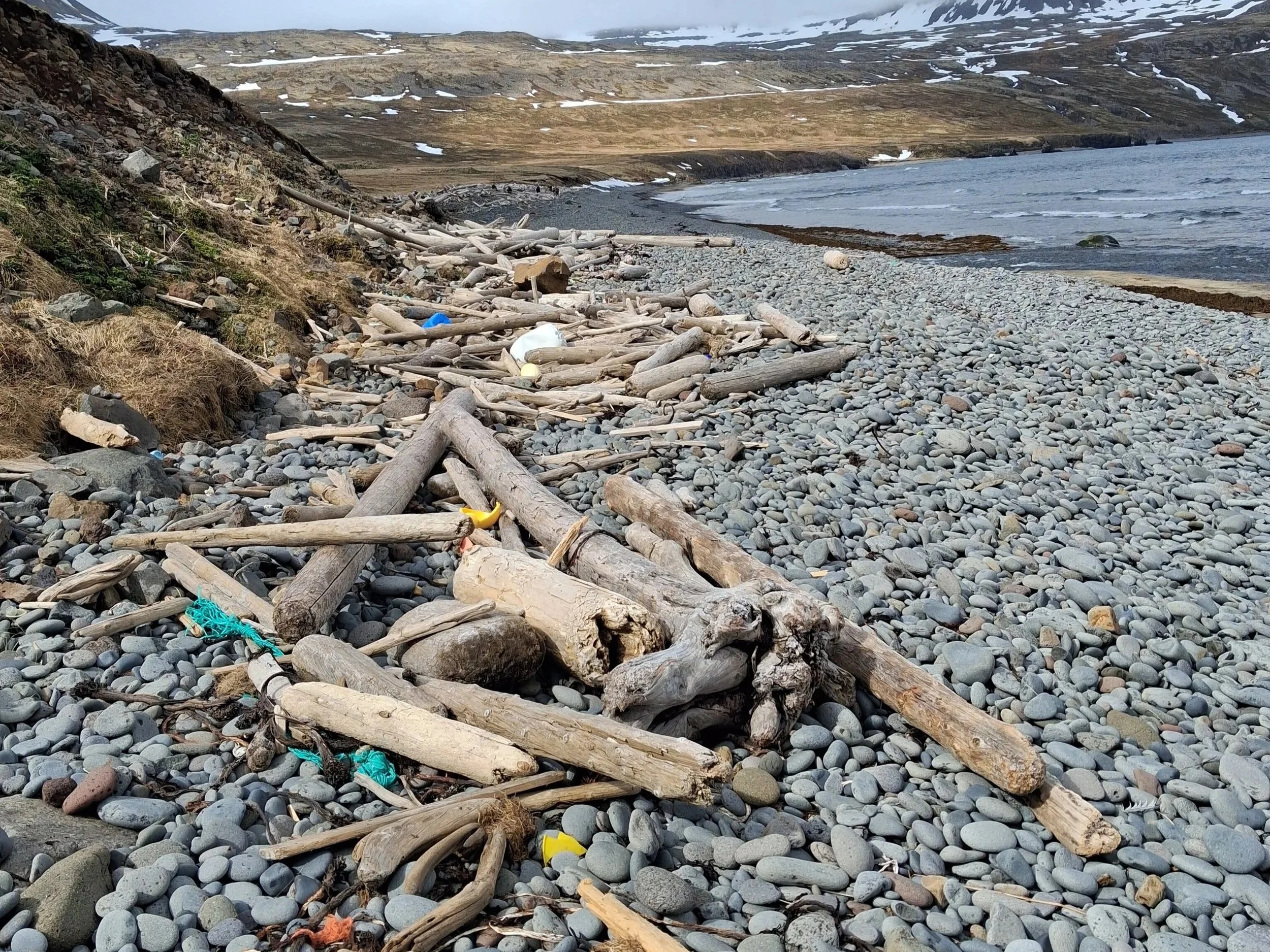
Hlöðuvík Cove in Hornstrandir peninsula.
OSPAR Convention
Before we go into the experiences of attempting to clean an entire region's coastline, it is important to understand the purpose behind this work. Essentially, it started with the Torrey Canyon Oil Spill disaster of 1967, which was, in some regards, the catalyst for region-specific protection of the North Atlantic marine environment. This led to the creation of the Oslo-Paris Commission (OSPAR) for the North Atlantic in 1992, and the Coordinated Environmental Monitoring Programme (CEMP) was created under the OSPAR umbrella to facilitate the monitoring, data collection and assessment of marine litter within OSPAR’s regions. There are five of these regions, namely the Arctic, the Greater North Sea, the Celtic Sea, the Bay of Biscay and the Wider Atlantic.
OSPAR’s North East Atlantic Environmental Strategy (NEAES) is a framework for achieving healthy seas; it is an action plan with 12 strategic objectives pertaining to achieving Good Environmental Status (GES). Strategic Objective 4 focuses on the prevention, mitigation and reduction of marine litter (including microplastics) to levels that do not cause adverse impacts to the coastal and marine environment. For context, in the case of marine litter, the threshold for GES is less than 20 items per 100 m of coastline.
According to the 2025 NEAES progress report, objective 4.03 states that the aim of reducing single-use plastic items and maritime-related plastic items on beaches in line with the relevant EU threshold values was only partially met and is on track to only be partially met. This means that the overall goal of a 75% reduction is not currently on track to be achieved by 2030.
Iceland's Approach to Clean Beaches (Cleanup Iceland Initiative)
In September 2020, Iceland released an Action Plan on Plastic Matters (Úr viðjum plastsins — Aðgerðaáætlun í plastmálefnum) in response to EU Directive 2019/904 on single-use plastics and growing public demand for a cleaner environment. Worth noting is Chapter 16 – Beach Cleanup Programme, which is described as a national beach cleanup programme involving municipalities, NGOs and the Coast Guard. The programme initially ran from 2021 to 2025; however, it was granted a three-year extension to 2028 and adopted as a national strategy in 2022. Its overall goal is to remove litter from all of Iceland’s coastlines. The extent to which this goal can be achieved remains to be seen, as there are currently no official data analyses covering the area in question.
Iceland’s ocean currents are dynamic, creating important pathways for the transport and accumulation of marine litter. The East Greenland and East Iceland currents bring cold, low-salinity-content water. Warm, high-salinity water is brought as an extension of the Gulf Stream current by the North Atlantic, Irminger and North Iceland Irminger Current. Finally, there is the Iceland Coastal Current, which circumnavigates Iceland’s surface water coastline. These systems meet, mesh, and mix together, bringing prime fishing grounds as well as hotspots of transatlantic marine litter.
Strandhreinsun Islands
In spring 2026, Jake, Isabelle and Gustav founded a non-profit, Strandhreinsun Islands (Beach Cleanup Iceland), with the ambitious goal of cleaning the entire region of the Westfjords (within reason) by the end of 2028, covering between 800 and 1,100 km. This summer, the team has been spending time scouting many of the 50 fjords, coves, quays, bays and beaches that make up the Westfjords coastline.
Through researching OSPAR’s monitoring programme, the team realised that the Arctic Seas region of OSPAR was facing major challenges in meeting the requirements for beach cleanups and marine litter monitoring. They therefore took it upon themselves to investigate the difficulties and obstacles that have made beach cleanups so difficult.
And the challenges are aplenty – the main one being accessibility. Many fjords and beaches in this remote region of Iceland are nigh on impossible to access without high-quality, durable vehicles. This has, in turn, made transporting the litter back to Isafjordur difficult. Each cleanup is an entirely separate story in and of itself.
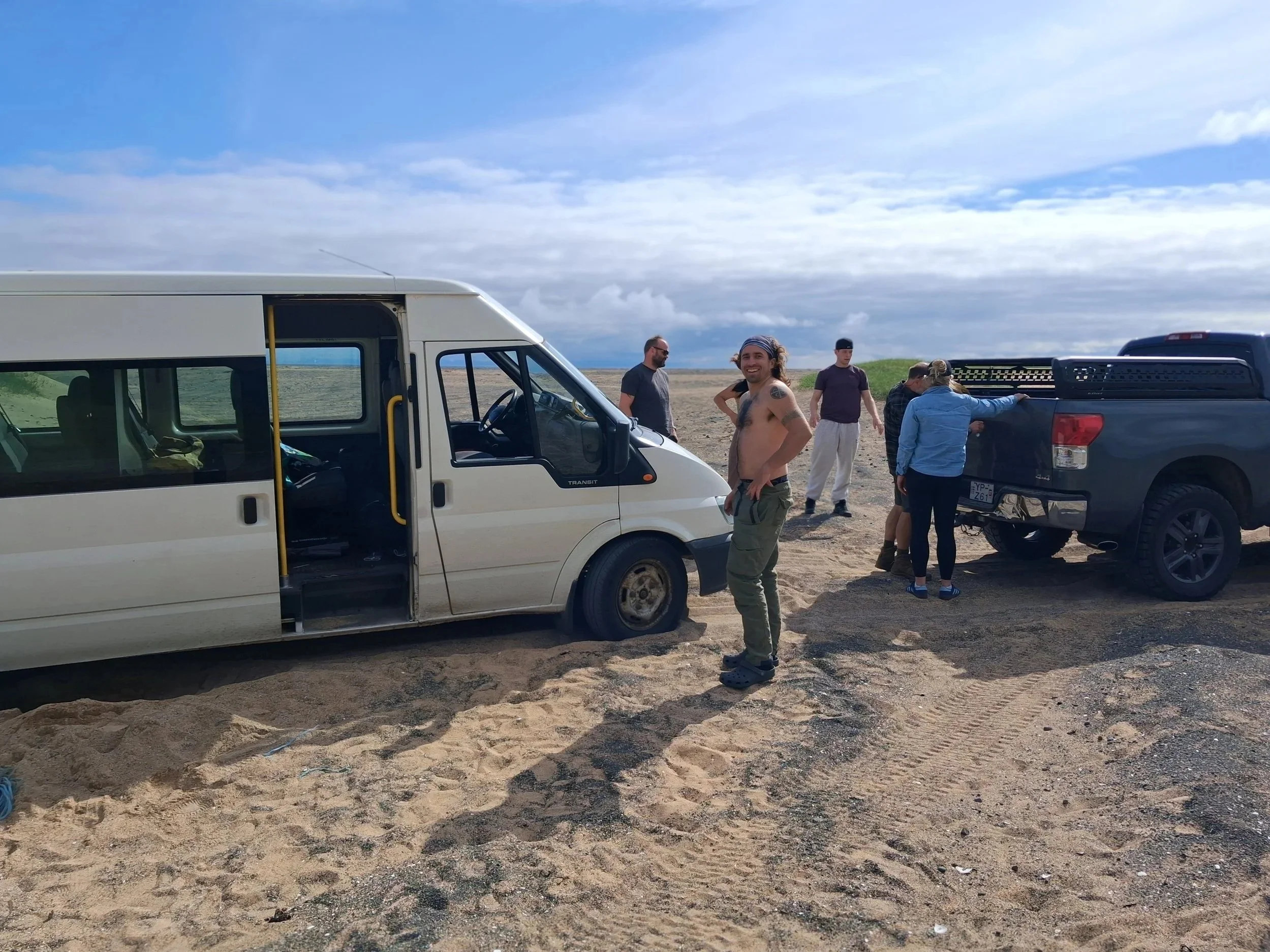
Stuck in the sand at Barðastrandarsandur
The cleanup at Hlöðuvík in May was the most northern cleanup Gustav and the team participated in; it took them to the Hornstrandir Nature Reserve. The entire peninsula of Hornstrandir has been uninhabited since the 1950s; it has no road access. The southernmost part of the peninsula houses Drangajökull glacier, further limiting access by road. So the team went by boat, which required favourable weather conditions.
This particular cleanup has been organised by a separate group of volunteers from Strandhreinsun Islands. The organisation has conducted cleanups on the Hornstrandir peninsula for many years and has also monitored the area in accordance with OSPAR’s guidelines.
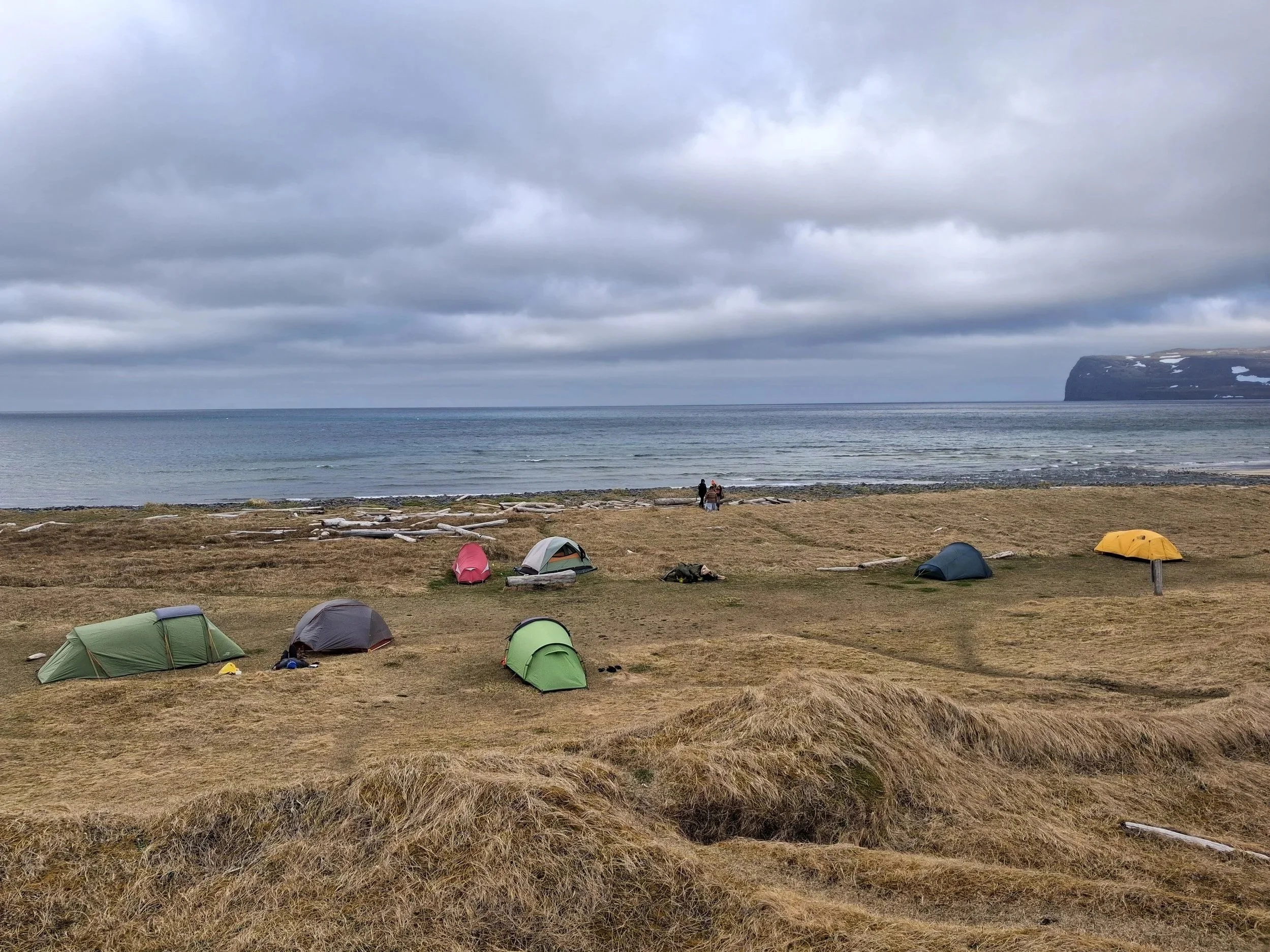
Camping at Hlöðuvík Cove on the Hornstrandir peninsula.
Along the 5 km of coastline at Hlöðuvík, the amount of marine litter found was equivalent to a shipping container's worth of rubbish. The 100 m transect of data collected by the Strandhreinsun Islands team found 387 individual litter items, far above the GES standard of < 20 items per 100 m.
Given their busy summer schedule with other obligations the team has still achieved much of what they set out to do this year. Samples have been collected from five beaches marked on the map in “red”, and these beaches have also been cleaned. The ones marked in “yellow” are upcoming cleanups. Thanks to the Cleanup Iceland Initiative, the team received a substantial grant to help realise this goal. The funding has been used to invest in a van for volunteer excursions and general transport of litter, as well as a small rubber boat to access difficult areas.
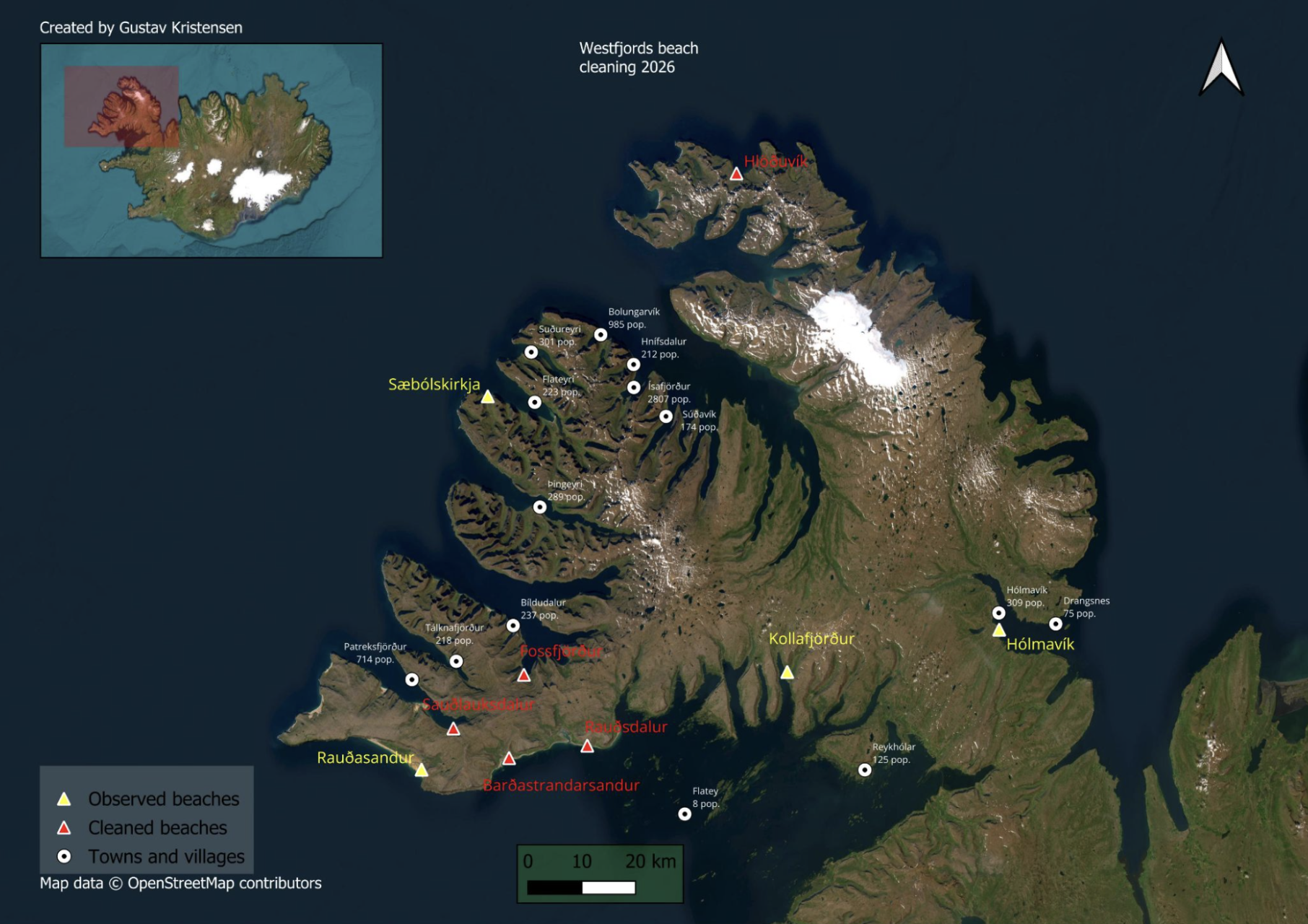
So far, the team has observed over 150 km of coastline, assessing the area, determining its cleanliness and cleaning beaches along the way. Of the litter collected, the majority pertains to the fishing industry and accounts for over 90%, in the form of nets, rope, and buoys.
Now, as winter approaches, the Westfjords will become engulfed in snow and ice, making these areas even harder to access. The team will therefore focus on analysing the data further and exploring alternative ways to adequately upcycle the litter collected throughout the summer.
The data collected during this project follow OSPAR’s monitoring guidelines but are not official OSPAR data, as the project is not part of OSPAR’s formal monitoring programme. Nevertheless, the findings provide valuable insight into marine litter accumulation and the challenges of monitoring and cleaning remote coastlines in the Westfjords.